

Agents of Change in a Sometimes Stagnant World

For too long, the learning space on our campuses has been occupied by the faculty. We in student affairs have been relegated to the cocurricular instead of the curricular. To be sure, we have certainly contributed to student learning and often measure this through student learning outcomes. We have evolved our student engagement models to include living-learning communities, service learning opportunities, and other curricular activities, and have been willing partners with the faculty. Yet have we truly created an educational revolution that changes the way students learn?

I can remember being excited as an undergraduate when our student activities programming was both entertaining and cultural – especially when the event was selected as one offering mandatory “cultural credits.” It is also not long ago when the cutting-edge curricular programming was the faculty last lecture series. Increasingly, more of our activities are joining the living and learning aspects of being a student. We are excited when this happens as it allows us to feel a part of the curricular, if only for a moment.

Despite the world of higher education being somewhat stagnant, I think the time is right for a change. Evolution is on our doorstep. We have begun to see hints of this in our work in recent years. Social media has opened new ways of communicating within and outside our campuses. Massive Open Online Courses (MOOCs) are appearing on many campuses in an alien-like invasion creating both excitement and havoc. Student expectations are changing in ways that we have not seen since the 1960s – rapidly causing us to reconsider what it means to be a student and what it means to provide for the affairs of these students. We are facing a revolution that is sure to change higher education and we must be prepared. Urban fantasy author Richelle Mead said it best, “The greatest and most powerful revolutions often start very quietly, hidden in the shadows. Remember that.” It is time for student affairs to come out of the shadows.

Innovation, Disruption, and Adaptation

There has been much discussion on innovation and disruption in higher education, especially in terms of technology. When online learning first appeared, the debate was regarding the quality of the content and the limitations of the original technology. However, there were many experts who theorized that online learning would be the demise of college campuses. Fast forward to 2011 when MOOCs erupted onto the scene and called into question the traditional classroom delivery of content. While not exactly fulfilling the prophecy of the online prognosticators, the technology is advanced enough to make MOOCs a viable contender to challenge education as we know it.

In student affairs, our MOOC has yet to evolve. Certainly technology is not a new phenomenon. Yet, we have not been particularly vocal about our ability to create student services that can be scaled, in typical MOOC style, to thousands of students. We have seen some innovation and potential disruption in areas such as student support, student conduct, assessment, and other administrative functions, but far too little based on the existing technology. How does student affairs evolve to an online model? More importantly, does it need to?

These questions bring us to adaptation. Disruption in student affairs will magnify as we continue to adapt technologies for expanded use in our various domains. Student affairs professionals have embraced Facebook, Twitter, Pinterest and a host of social media as places of community. We have evolved our thinking to engage students on their turf in these communities as we have simultaneously developed our own digital identities. Yet, much more needs to be developed. Consider how we create opportunities for social bookmarking instead of simply using Twitter and other media as alternate sources for e-mail. How can we increase the documentation of student learning through content curation? Essentially, our challenge is to expand opportunities for students to tell their story.

Changing Student Needs

As student affairs professionals, we have long been focused on our traditional and non-traditional students offering programs, creating services, and generally doing much to meet their needs and assist them in both navigating and successfully completing college. But the landscape of higher education, as it has done so much over the years, has again transformed. Today, we see students coming to our campuses seeking new training or knowledge to advance career opportunities, having already entered the workforce. These students plan to continue working, often significantly, while attending class. This post-traditional student differs from other students who work. Their reason for being on campus is driven more by cost, location and accessibility than by choice or prestige. What is their story?

While it may be easy for us to dismiss these students as not having an interest in or need for our services, this is far from reality. Post-traditional students will value opportunities for engaging outside the classroom particularly if it is relevant to their learning goals. Although we have traditionally found ourselves bound by FERPA, consider ways of expanding communities of support on campus to include parents, family members, and others of significance to the post-traditional student. This can be accomplished through social media or other means of personal communication.

Expanding communities of support is not limited to a specific population of students. All students can benefit from our intentional efforts to expand these communities, particularly when this extends beyond the confines of the campus. Consider creating living-learning models that provide opportunities for students to work while learning. I’m not suggesting the traditional internship, but more of an “earn-while-you-learn” model that immerses students simultaneously in class, activities, and work where the content of all complements the other.

Such a model would require deepening partnerships with employers who hire our students and expanding curricular content to be compatible. The future of higher education may very well depend on just such a model as expressed by Kevin Kruger, president of NASPA, “Student affairs professionals must be able to document and articulate how the cocurricular experience contributes to developing the skills and competencies employers and society need and value.” Our job as student affairs professionals is to overcome the barriers and convince others that content is no longer the domain of faculty but the responsibility of this expanded network of learners and stakeholders.

Our time is here. Frankly, it has been for some time. None of what you have just read should be a surprise. Student affairs professionals have been creating alternative learning spaces and communicating with students on the backchannel for many years. In some ways, we have been the pioneers. However, in many ways, we have left the true change to others, often coming on board only after others have paved the way. Now it is our time to take the lead and push the change agenda forward. We must set the direction for student learning that combines the curricular and the cocurricular in ways that engage students beyond the confines of our classrooms and campuses. We must create new pathways for student success both for those students we have always served and for those coming to us seeking new opportunities. We must make our relevance on campus too important to ignore. Our students are depending on you.

Your mission, should you choose to accept it, involves the evolution of student affairs. You may partner with any number of people on campus, but time is short as change is coming fast. As always, should any member of your team be caught, the vice president will have to disavow all knowledge of your actions to protect her from the faculty. This message will self-destruct in five seconds… four… three…two…one!
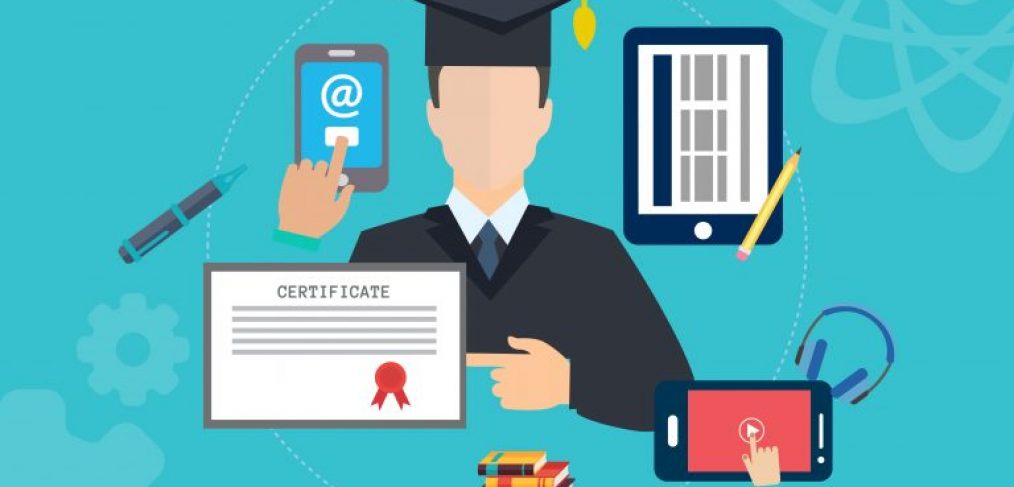
MOOC

Is Google the next MOOC?

By now, everyone has heard about MOOCs – Massive Open Online Courses. MOOCs offer unlimited participation and open access to anyone seeking information or knowledge. There are millions of people taking these courses… and who can blame them? The opportunity to learn in the terabyte world of the web is available at the fingertips of anyone with a laptop and an internet connection. But universal access to great thinking is certainly not new. Excite came on the scene in 1993… Yahoo began connecting us in 1994… and the Google revolution has been fulfilling our need for information since 1998. In fact, Google’s mission is to “organize the world’s information and make it universally accessible and useful.” Sort of sounds like a MOOC.

Is Google the next MOOC? The concept of the massive open online course offering access to anyone was a novel idea only in that it created a vehicle for the learning to occur. But access to much of the same knowledge exists in searchable form on Google for anyone willing to find it. In fact, Google has partnered with Coursera to offer a Google MOOC. It seems to me that Google meets three of the four criteria to be considered a MOOC. Google is massive. It has created algorithms and tools that organize a seemingly infinite amount of information and knowledge on the web. Google is open. It is free and available to many users worldwide, easy to use, and provides open access to content on virtually any subject. Google is online, obviously. However, Google is not a course in the traditional sense of how we think of learning. But can it be?

In our continuing evolution from teacher-directed to self-directed learning, what exactly is a course? While they provide some disruption to this concept, MOOCs are generally still traditional in scope and feel to other courses. There are lectures, discussions, and competencies to be met. But, with a little creativity Google can be a course as well. For those who want to learn and are willing to explore, the information and knowledge is accessible. One can learn almost anything through Google. When higher education institutions, and more importantly the companies that hire graduates, more readily accept life experience and self-directed learning as adequate substitutes for traditional courses, Google can become a course in the broadest sense. All that will remain is competency and this will ultimately be determined by performance.

Oscar Wilde once said, “Education is a worthwhile thing, but it is well to remember that nothing worth knowing can be taught.” His suggestion that individuals must be responsible for their own learning is an important consideration in this discussion of self-directed learning. What better way to learn than to log on and begin surfing?

Leading Change in Higher Education: The Great Compromise

Okay, I fully admit that I have shamelessly taken the concept for this blog from Ian Morrison and his 2011 book titled Leading Change in Health Care. I have done so because I see a clear connection between the state of healthcare and the state of higher education in America – both are an “ugly compromise among cost, quality, and access.” Where healthcare is challenged in balancing these for the vulnerable and sick, higher education is challenged in balancing these for all who are seeking to make a change in their lives.

The Compromise of Cost

There are many forces driving the cost of delivering higher education and competition for students is top on the list. Institutions are building bigger and better facilities, adding more amenities and creating pleasing environments, all to attract and retain students. When my son and I were touring campuses a few years ago, our running joke was how long it took the admissions representative to talk about the world-class climbing wall. But it’s not all about recruiting students. Institutions are under pressure to recruit top-notch faculty with cutting-edge research projects and the accompanying grant dollars that come with them; or those faculty members who bring some level of prestige to the classroom based on the body of their academic work. Finally, there has been a significant increase in non-teaching jobs on campus to support students, faculty and the mission of the institution, sometimes driven by unfunded federal mandates, but often simply to meet a real or perceived need.

I was speaking to a local Rotary club recently and was asked a question about the cost of higher education. Like many parents I talk to, he was concerned about the rising cost of attending college and was looking for some justification from the “expert” in the room. My answer may have shocked him. I told him that college simply costs too much. By some estimates, the cost of attending college has increased by more than 200% since the mid-1980s, even when accounting for inflation. To ice the cake, this increase is outpacing the available financial aid causing more students to borrow and graduate with increasing debt. Higher education leaders certainly need to take a hard look at institutional expenses to reduce cost to students.

The Compromise of Quality

How often have you heard someone say they need to attend the best college or university to ensure they have the best opportunity to get a job? But what defines the best institutions? Are the Ivy League institutions the best? Undoubtedly, there is a lifelong value in attending one of these institutions. Does US News and World Report define the best institutions? Drive along any highway in America and the billboards certainly seem to support this conclusion. But quality is something that is dependent on the context. There is no single accepted definition of quality. Phillip B. Crosby defines quality as “conformance to requirements” while W. Edwards Deming suggests quality is “meeting customer needs and wants.” Let’s explore these two definitions in the context of higher education.

There are many requirements placed on institutions of higher education by the public, by the accrediting bodies, by the government and by others. Simply conforming to these requirements does not imply a quality education – it suggests an average education. Excelling in meeting these requirements suggests quality and this is a typical way we look at institutional quality. Consider graduation rates and job placement rates. The average graduation rate among four-year public colleges in America is 59% (six-year rate). For young adults (20-24) with a bachelor’s degree, the employment rate is 86%, but it is assumed that some of these people are under-employed. For institutions to claim to offer a quality education, excelling in these “requirements” is the standard for quality. This is accomplished in many ways through the curriculum and the services provided on campus.

To define quality through the lens of customer needs and wants is a very different approach. Consider what it would look like to measure student success through their goals. For some, it would look like graduating from a four-year college and getting a job. Or, it could be taking a few welding classes and then finding a good-paying job to support your family. For others, it may be bypassing college altogether and seeking an alternative career pathway. For the first student in the above scenarios, we would all classify that a quality education… but not so much for the other two students. Yet, all could be quality educational experiences with successful outcomes. Higher education needs to embrace multiple pathways more effectively.

The Compromise of Access

Enrollment in college reached a peak in 2010 but has been on a steady decline of almost 5% since then. There are many supposed reasons for this, and the improving economy is among them (assuming COVID-19 will only be an outlier). Traditional aged students can forego college and go straight to work and post-traditional students are staying in their jobs instead of seeking new careers. But this is only part of the picture. The 2016 election brought into light the deep concerns about the opportunity gap in America and how many people feel left behind or left out. We saw even deeper divides in the 2020 election. Many of our institutions of higher education have been party to these concerns for the reasons discussed above. Inequities in economic opportunity and among disenfranchised populations have not adequately been addressed in higher education and beyond causing many to label colleges and universities as elitist and ivory tower.

But of course, this is misleading. While higher education has its flaws, it is egalitarian by design with opportunities for all. Focusing on diversity and inclusion are critical aspects of an accessible institution seeking to produce students who will benefit from such an environment. Increased state and federal funding are critical, but it is not the panacea we are looking for. More education on choice is necessary – students need to understand that they do not have to choose the elite private institution or the large state university… they can instead start at the local community college to begin their higher education journey. It is not all about cost when thinking about access. But, we need to make institutions more inviting and safe places for everyone.

The Bonus Compromise of Value

The great debate in higher education is centered on the value of the degree: is it attained for the purpose of learning or to prepare one for work? In practice, this may not be dichotomous, but it is often portrayed that way. I like to think that everything we learn in college has value for our future and that we are not educating students for their first job, but for a lifelong career. This means that there must be a balance and a shared responsibility among students, institutions and employers for lifelong learning. The value of higher education is clear: those with a bachelor’s degree earn nearly $1 million more than those with a high school diploma in their lifetime.

Those of us in higher education and our stakeholders must understand the nuance of cost, quality, and access and seek to ensure that we are diligent in our pursuit of value and equity. It is not enough to simply wait for our lawmakers to demand change, we must listen to the rising voice of the student-consumer and demand change ourselves. We must be the ones to lead this change before we are legislated to do so. We must understand our increasing responsibility to ensure access to higher education, provide a quality learning experience, and do so at an affordable cost. I’ll close with the words of William Butler Yeats, “Education is not filling a pail but the lighting of a fire.”